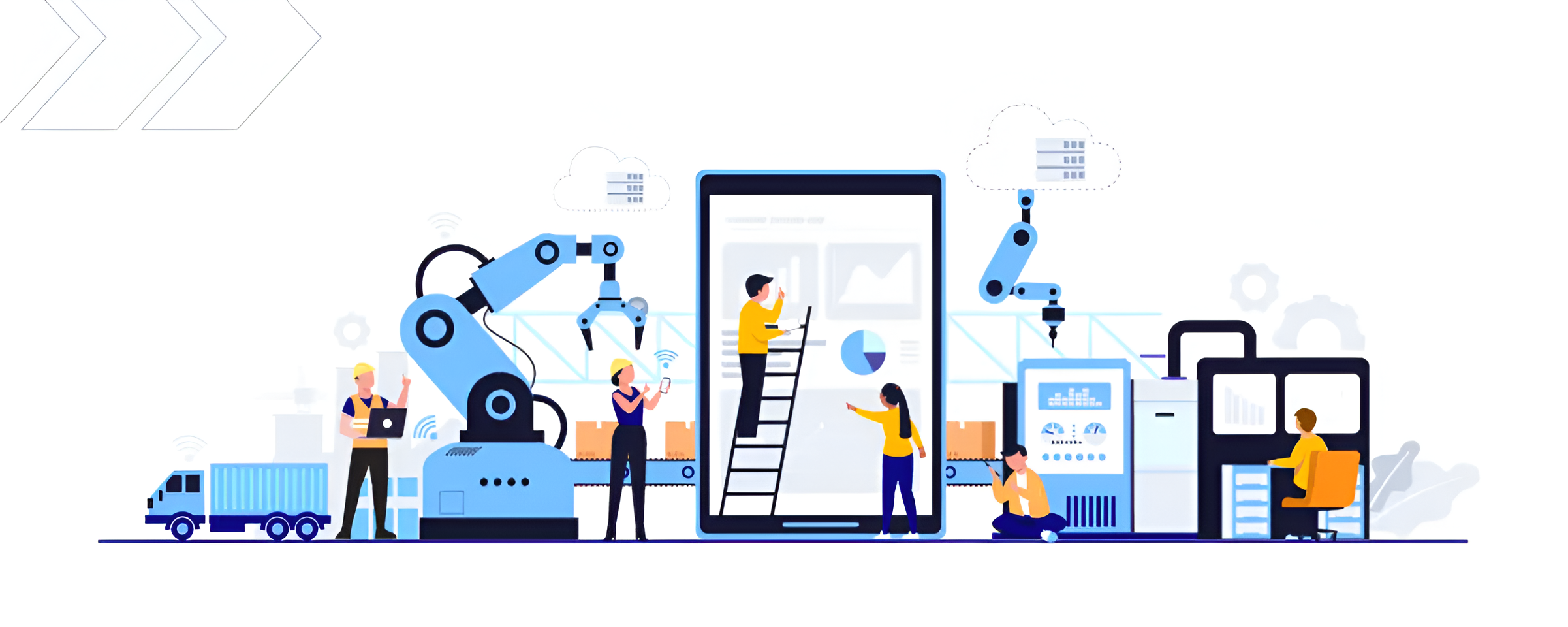
Looking ahead to 2026, manufacturing is entering a more practical phase of AI adoption, focused on how people and machines collaborate on the factory floor. In 2025, we saw the combinations of Industry 4.0, which focused on AI and smart automation, and Industry 5.0 which builds on this by adding a human-centric layer, emphasizing collaboration between humans and machines.
We have a clear understanding of what industry 4.0 requires, not just new technology but also new workflows, new skills, and changes in how teams operate. At the same time, different advancements are changing and reshaping how products are designed and built. Manufacturing is evolving and automation and intelligence are embedded from ground up.
After doing some digging into industry developments, here some key trends we are keeping an eye out for as they shape the next phase of industrial transformation in 2026:
As we look ahead to 2026, manufacturing is moving into a more practical phase of AI adoption - one that focuses more on how people and machines actually work together on the factory floor. Over the past year, we’ve seen the convergence of Industry 4.0, which emphasized AI and smart automation, and Industry 5.0, which builds on that foundation by adding a more human-centric layer centered on collaboration between humans and machines.
Industry 4.0 is no longer just about deploying new technologies. It requires new workflows, new skill sets, and shifts in how teams operate. At the same time, continued advances in automation, robotics, and intelligence are reshaping how products are designed and built, with these capabilities increasingly embedded from the ground up.
After reviewing current industry developments, here are the key trends we’re watching as they shape the next phase of industrial transformation in 2026:
Industrial AI becomes
Action-Oriented
AI in manufacturing is shifting from insight to execution. Instead of simply analyzing data, AI-driven systems are beginning to plan, manage, and optimize operations in real time. Agentic AI is expected to generate up to $650 billion in additional revenue by 2030 across industries, according to Mckinsey research from September. By connecting sensors, machines, and people, these systems can coordinate workflows end-to-end, reducing downtime, preventing bottlenecks, and bringing truly autonomous factory operations closer to reality.
Generative Design Moves into Production at SK
Generative design is no longer limited to experimentation. Manufacturers are beginning to use AI-driven design tools directly within production workflows, accelerating development timelines and improving material usage. By defining performance targets, constraints, and cost requirements upfront, teams can explore smarter designs faster and move from concept to production with greater confidence.
At SK, we’re actively advancing this shift in 2026 through new AI/ML integrations by bringing intelligent design and decision-making closer to the shop floor and providing warehouse solutions for more adaptive manufacturing systems.
Extended Reality Enters the Factory Floor
Virtual and augmented reality are becoming practical tools for manufacturing, especially when combined with virtual models and AI. These technologies give engineers and technicians real-time guidance, improve training, and reduce errors during assembly and inspection.
Industry 5.0 Brings the Focus Back to People
Arguably the most important, the conversation is shifting toward Industry 5.0, where automation is designed to support people, not just replace them. This includes human-centered interfaces, safer collaborative systems, upskilling the workforce, and using technology responsibly and sustainably. The goal is balance: leveraging automation and AI while preserving human expertise.
As manufacturing continues to evolve, the most successful organizations will be those that use technology to help assist human potential and design smarter operations from the start. At SK, we see 2026 as the next step in creating more intelligent and sustainable manufacturing solutions.